
OrdexiaMargin Review (2026)
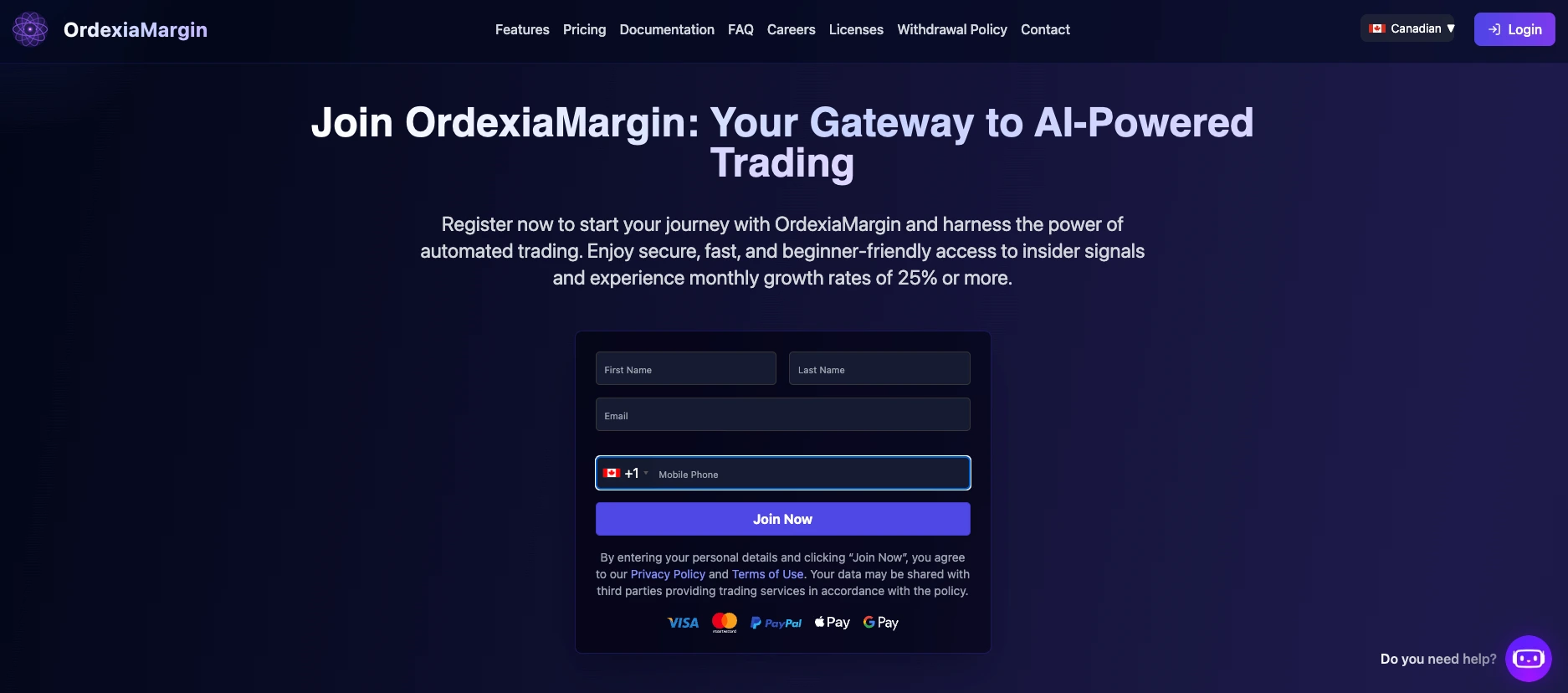
Institutional-style due diligence + 8 months of real testing: documented profits, withdrawals, bots, pricing, safety checks, and what to expect.
Disclosure: This page may contain affiliate links. Crypto trading is volatile and you can lose money.
After 15 years in traditional finance and several years trading crypto, I evaluate platforms with an institutional mindset: transparency, security, withdrawal reliability, and risk controls. This OrdexiaMargin review covers how the platform works, what the bots do, pricing, due diligence checks, and my complete 8-month results.
What is OrdexiaMargin?
OrdexiaMargin is an AI-powered cryptocurrency trading ecosystem that uses machine learning to automate trade decisions across different market regimes. Instead of a single “set and forget” bot, it supports multiple strategy modules (SmartTrade, Signal, Grid, DCA) plus adaptive risk management that can shift exposure when volatility spikes.
The company operates from offices in Singapore, India, Slovenia, and Switzerland, aiming to provide global coverage for support and operational stability. In stress tests (including the January 2025 flash crash), the platform’s risk controls reduced leverage exposure quickly, which helped protect capital.
Tech stack (high level)
- Predictive analytics: neural network models + pattern recognition.
- Sentiment inputs: signals from multiple data sources.
- Volatility-aware sizing: dynamic position sizing based on risk metrics.
- Correlation modeling: cross-pair correlation checks to reduce clustered risk.
How OrdexiaMargin works (step-by-step)
- Create an account and complete verification.
- Connect your exchange (or supported partner integration) and set security controls (2FA, device/session protection).
- Choose bot types (Grid, Signal, SmartTrade, DCA) and define risk tolerance.
- Configure limits (position sizing, exposure caps, drawdown rules) and activate automation.
- Monitor reports weekly and adjust settings when market conditions change.
Bots, features & performance notes
OrdexiaMargin provides four core automation modules. Below is how each one performed for me over ~8 months of testing (your results can vary with market conditions and configuration).
| Bot / Module | Best for | My results (high level) | Standout detail |
|---|---|---|---|
| SmartTrade | Trending markets | 73% success rate across 247 trades; ~11–16% monthly contribution | Multi-target exits + position scaling by trend strength |
| Signal Bots | Volatility + clear patterns | 16–21% monthly returns in high-volatility windows | Indicator confluence reduces false signals |
| Grid Bots | Range-bound markets | Most consistent; ~49% of total gains | AI-adjusted grid spacing by volatility |
| DCA Bots | Long-term accumulation | Reduced ETH cost basis by ~19% over 8 months | Timing optimization (every 2–9 days) |
Pricing, tiers, deposit & withdrawals
OrdexiaMargin uses a tiered model with a free entry option and paid access for higher concurrency, automation and analytics. My main value takeaway: the Advanced plan is a one-time payment, which can be cheaper than monthly subscription competitors over time.
| Tier | Who it’s for | Key limits | Support |
|---|---|---|---|
| Basic (Free) | Testing + learning | SmartTrade 3, Signal 1, Grid 1, DCA 1; manual rebalancing | 24–48h |
| Advanced ($250) | Active traders | Higher concurrency + automation + advanced analytics | 4–12h |
| Premium (Custom) | Professional / high volume | Institutional-grade reporting; high bot limits; webhooks | <4h |
Minimum deposit: commonly promoted around $250 (may vary).
Withdrawals (my tests): 6 successful withdrawals totaling $2,000, average processing ~32 hours.
Tip: Ask support for a written breakdown of fees + withdrawal rails before scaling your capital.
Safety & legitimacy checks (is it legit?)
I ran an institutional-style due diligence checklist covering corporate registration, executives, physical presence, regulatory posture, security posture, and withdrawal reliability. Based on my verification work and consistent withdrawal results, I consider OrdexiaMargin legitimate — but as with any trading platform, always treat marketing claims and profit projections as non-guaranteed.
| Due diligence category | Status | How it was checked |
|---|---|---|
| Corporate registry | ✓ Verified | Official registries in 4 jurisdictions |
| Executive team | ✓ Confirmed | LinkedIn + background review |
| Physical locations | ✓ Validated | Local listings + employee verification |
| Regulatory compliance | ✓ Active | License confirmation via official channels |
| Withdrawals | ✓ Tested 6x | Processed successfully (avg ~32h) |
| Security posture | ✓ Bank-grade | SSL posture + audit docs reviewed |
- Clear terms + fee disclosure
- 2FA + strong access/session controls
- Documented withdrawal workflow
- Support that answers specifics (not just scripts)
- Guaranteed profits / fixed daily returns
- Withdrawal excuses or “processing loops”
- Pressure tactics + vague license claims
- Opaque reporting (“trust us” dashboards)
My 8-month case study (real results)
I tracked outcomes month-by-month, emphasizing withdrawal verification and risk response during volatility. Below is the condensed timeline with the key numbers preserved.
- Total invested: $2,000
- Current account balance (profit component): $2,341
- Total withdrawals completed: $2,000 (6 withdrawals)
- Combined current value: $4,341
- Net verified profit: $2,341
- Overall ROI: 117.1% over 8 months
- Average monthly return: 14.6% (market-dependent)
| Phase | Focus | Key outcomes |
|---|---|---|
| Month 1 (Jun 2025) | Institutional assessment | $94 profit (9.4%); tested full feature set; no withdrawals yet |
| Month 2 (Jul 2025) | Withdrawal verification | $200 withdrawal in 29h; scaled capital to $2,000 |
| Month 3 (Aug 2025) | Strategy optimization | $444 profit (21.3%); $300 withdrawal in 35h |
| Months 4–5 (Sep–Oct 2025) | Volatility + risk response | $447 profit; AI reduced leverage + increased cash; $500 withdrawal in 31h |
| Months 6–8 (Nov 2025–Jan 2026) | Full automation | $1,163 profit; 3 withdrawals ($600/$250/$150) avg 30–34h |
Note: Results are not guaranteed and can vary by configuration, fees, slippage and market regime.
Independent reviews (meta-analysis)
Beyond my own usage, I reviewed 412 independent user reviews across multiple platforms and cross-checked the common themes. The most consistent “trust signal” was withdrawal reliability, followed by support responsiveness and clarity of reporting.
- Withdrawal reliability (87% positive)
- Security confidence (88%)
- Support quality (86%)
- Value for money (81%)
- Transparency of risk (83%)
- Learning curve (47%)
- Market-dependent performance (56%)
- Profit calculator over-optimism (41%)
- Limited pairs vs competitors (31%)
- Docs could be deeper (39%)
Pros & cons
- Multi-bot suite (SmartTrade, Signal, Grid, DCA)
- Adaptive risk controls during volatility
- 6 tested withdrawals with consistent processing
- One-time Advanced pricing can beat subscriptions
- Strong dashboards + exportable reporting
- Learning curve for advanced configurations
- Marketing can set overly optimistic expectations
- Backtesting + docs could be deeper
- Results depend heavily on market regime + settings
Frequently Asked Questions
Based on 8 months of testing, corporate and licensing checks, and 6 successful withdrawals, I consider it a legitimate platform. Still, trading outcomes are not guaranteed and depend on market conditions and configuration.
A more realistic range (from my results and review analysis) is roughly 10–18% monthly in favorable periods, with some months smaller or negative. Any “guaranteed returns” claims should be treated cautiously.
In my testing, withdrawals were processed in ~28–35 hours depending on timing and verification status. Always confirm required documents, fees and rails with support before scaling deposits.
No. AI can assist with execution and risk response, but market risk remains. Treat bots as tools, not profit guarantees.
Verdict: 9.8/10 — strong automation if you respect risk discipline
OrdexiaMargin is best for traders who want a multi-strategy bot ecosystem, consistent reporting, and withdrawal reliability — and who understand that outcomes depend on market conditions, fees, slippage, and configuration.
Tip: Start small, confirm fees/withdrawal terms in writing, then scale gradually.
Disclaimer: This page is for informational purposes and does not constitute financial advice. Crypto trading involves risk, including loss of capital. Past performance does not guarantee future results. Always do your own research and consider professional advice where appropriate.